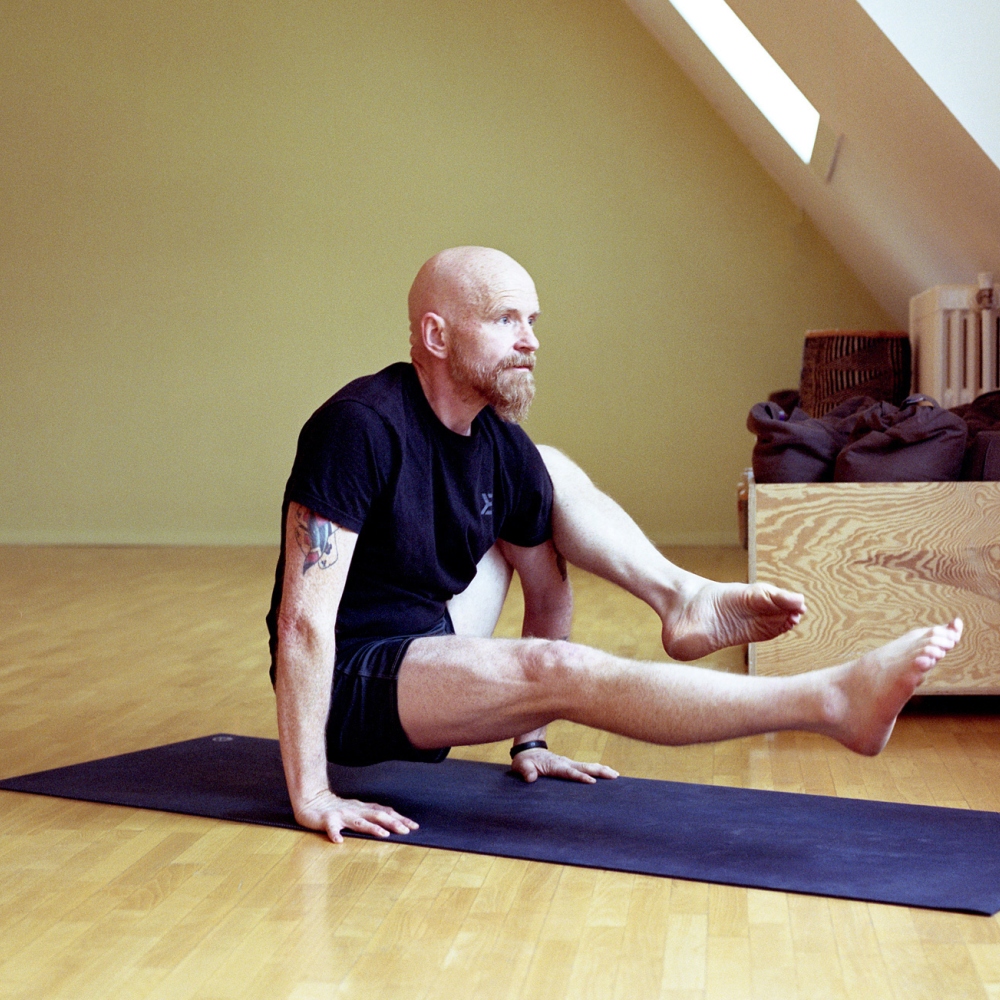
Workshop-series: Arm balances
-
Dato
07.–14.06.26 -
Tidspunkt
Kl. 10:00–12:00 -
Lærer
Nate Bunting -
Pris
1.000,-
- Nivå
NoIf you’re a regular yoga student, these workshops are suitable for you.
Påmelding søndag 7. juni
Påmelding søndag 14. juni
Arm balances are often treated as something to achieve. Here, they’re used as a way to practice.
A way to build real, integrated strength through the whole body, while developing coordination, awareness, and control. And a way to work directly with focus, hesitation, and breath under pressure.
This is a strength-based practice, but not for its own sake. Strength becomes the entry point into something deeper. As the work intensifies, you may notice how the mind moves toward like and dislike (rāga / dveṣa), how quickly focus drops when things feel uncertain, and how the breath can either support you — or disappear.
Over time, the practice shifts. Difficulty becomes something you can stay with. Effort is no longer tied to achievement. And the body becomes a way of returning to what is happening, in real time.
Across two Sundays, we’ll build the strength and understanding needed to support arm balances. This includes developing the ability to carry your own weight, coordinating strength and mobility, and creating intelligent engagement through the shoulders, core, and breath.
We’ll also look at how attention behaves under challenge — and how to stay with it.
No experience with arm balances is required. Only a willingness to practice.
Sunday 7th June, 10:00-12:00
Learning to Lift – Foundations
Build the strength and structure needed for arm balances. We’ll focus on wrist preparation, shoulder stability, scapular control, and core integration, using foundational shapes like Crow to understand how lift is generated — not forced.
Sunday 14th June, 10:00-12:00
Learning to Lift – Integration
Refine and expand the work through more complex balances and transitions, with greater demands on strength, timing, and coordination. Emphasis remains on breath, clarity, and staying steady when things don’t go to plan.
This is where the practice becomes more subtle — and more honest.